
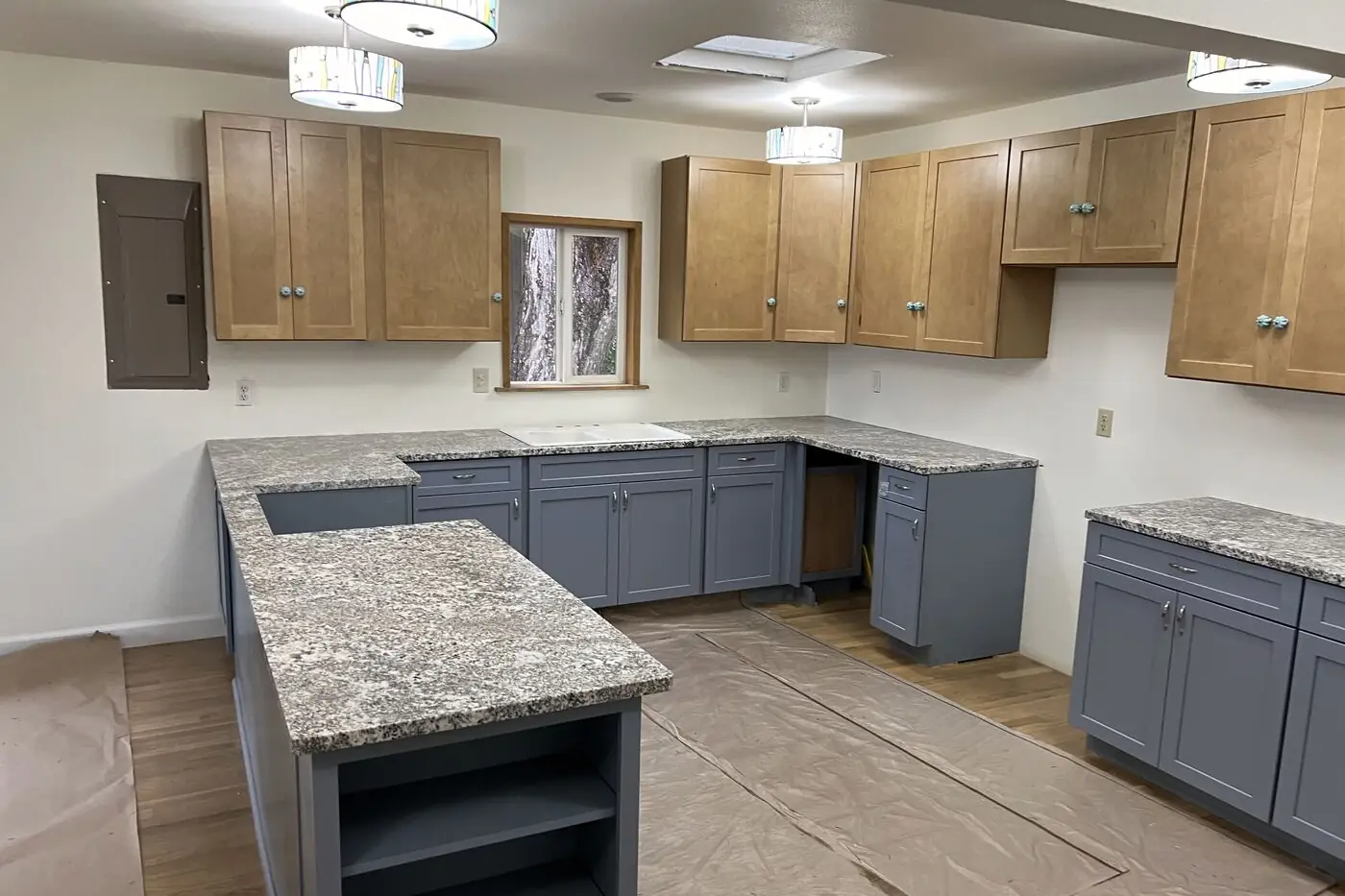
Quartz is manufactured: ground stone bound with resin, never sealed, and it scorches under a hot pan. Quartzite is quarried: a natural rock harder than granite that takes heat without flinching and needs sealing about once a year. The names are close. The two materials behave nothing alike.
Where each one comes from
Quartz slabs are made in a factory. About 90 to 93 percent ground natural quartz is mixed with polyester resin and pigment, pressed under vacuum, and cured. The color is a recipe, which is why you can order the same shade three years from now and get the same shade.
Quartzite starts as sandstone. Heat and pressure inside the earth fuse the sand grains into a single interlocked mass of quartz crystal. It is a metamorphic rock, and it is one of the hardest surfaces you can put in a kitchen.
Quartz vs quartzite, side by side
| Quartz | Quartzite | |
|---|---|---|
| How it is made | Pressed and cured in a plant | Formed underground, sawn from a block |
| Hardness | Mohs 7 mineral, resin binder is softer | Mohs 7, harder than granite |
| Hot pan straight off the burner | No. Makers cap it near 150 °F | Yes |
| Sealing | Never | About once a year |
| Wine, oil, coffee | Non-porous | Porous until sealed, then fine |
| Vinegar and lemon | Dulls the resin permanently | No effect on true quartzite |
| Direct sun and outdoors | Resin yellows. Not for outdoors | Fine outdoors |
| Pattern | Consistent, repeatable | One of a kind, directional veining |
| Scratching | Knives will not mark it | Knives will not mark it |
| Price | Mid to high | The highest of the natural stones we cut |
| Fabrication | Standard | Hard enough to wear out diamond tooling |
The label at the slab yard is not a lab result
This is the part that costs people money, and it only happens on the quartzite side.
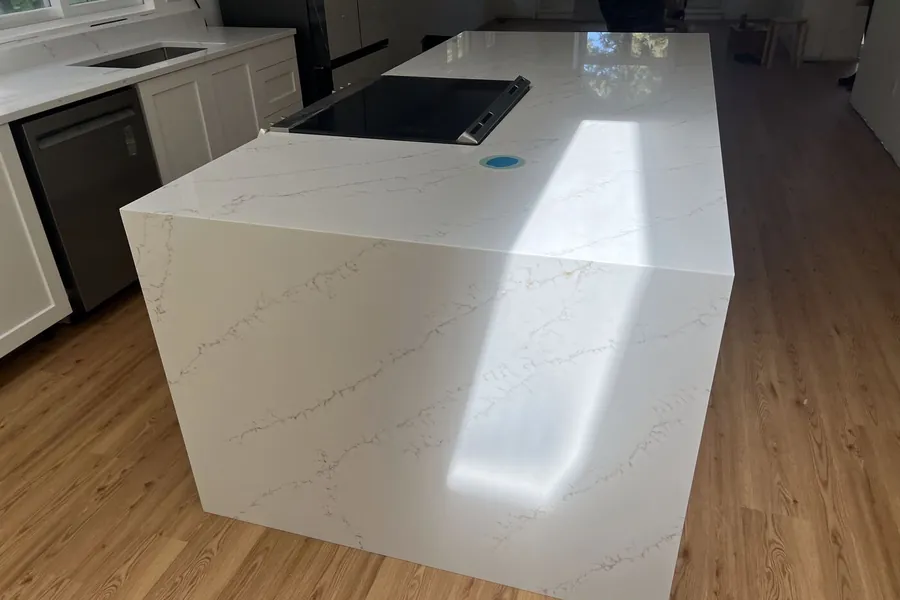
Slab yards label by look and by trade name, not by geology. Several of the most popular white stones sold as quartzite are dolomitic marble: softer, calcite-based, and they etch under a lemon. Super White is the well-known example. Others sold under the same banner are genuinely quartzite and behave exactly as promised.
There is no such problem with quartz. It came out of a press with a batch number on it.
Two tests settle it, and you can ask for both on an offcut before you buy:
- Scratch test. True quartzite is harder than a steel blade. Drag a knife across the offcut. Real quartzite leaves the blade's metal on the stone, wiping off clean. A gray line etched into the surface means the slab is softer than its label.
- Acid test. A drop of lemon juice, left a few minutes, then rinsed. A dull spot means the stone is calcite-based and will etch in your kitchen, next to your sink, forever.
Failing the test does not make a slab bad. It makes it a different material, which should be priced and cared for as one. Plenty of people buy it anyway with their eyes open, and that is a completely different outcome from finding out in year two.
Quartz vs quartzite: which one belongs in your kitchen
You want low effort above everything
Quartz. Soap, water, cloth, forever. No sealing, no test kit, no thinking about the lemon. The trade you accept: trivets, no direct sun, and a seam that shows in plain colors.
You cook on gas and things come off the burner hot
Quartzite. It formed under heat and pressure your stove cannot approach. A quartz top in the same kitchen will eventually take a dull ring from a pan, and heat damage is not a warranty claim anywhere.
You want the marble look without marble's behavior
Quartzite, specifically the Taj Mahal and Sea Pearl family. It is the honest version of that look in a natural stone. Marble-look quartz is the cheaper version, and it is genuinely good, but the veining is built into a resin surface and it reads that way in a raking light.
The budget is fixed and it is not large
Quartz. Quartzite is the most expensive stone in most shops, both at the yard and on the saw, because the same hardness that survives your kitchen destroys diamond tooling on the way through. Any shop quoting quartzite at granite money is quoting a softer stone or has not cut much of it.
The counter runs along a wall of south-facing windows
Quartzite. Years of direct sunlight yellow the resin in engineered quartz. Natural stone does not care.
A bathroom vanity, a laundry, a bar top
Quartz, or a quartzite remnant. No hot pans land in those rooms, so buy on looks and on what a remnant piece costs.
Seams and slab matching
Both materials seam. A kitchen run longer than a slab has to.
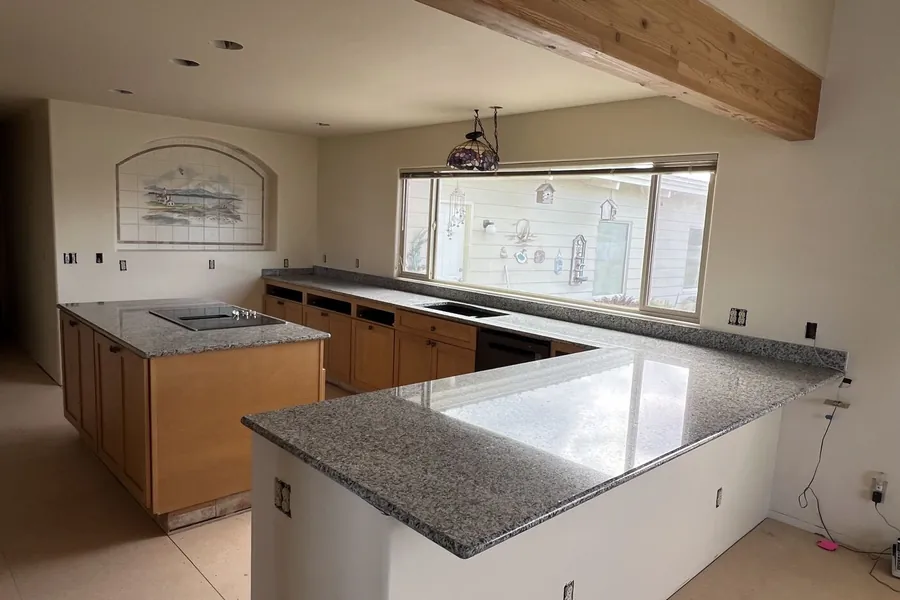
The difference is what the seam does to your eye. Quartz has a repeating, even pattern, so a seam in a plain white top reads as a line. Quartzite has big directional veining, so a badly placed seam cuts a vein in half and your eye lands on it every morning, while a well-placed one disappears into the movement.
If your kitchen takes two quartzite slabs, they have to come from the same block. Quarry blocks are sawn in sequence, so consecutive slabs agree and slabs from different blocks do not. With quartz you match a batch number instead, which is a phone call rather than a hunt.
Questions people ask
What is the difference between quartz and quartzite?
Quartz is manufactured from ground stone and resin, never needs sealing, and cannot take a hot pan. Quartzite is a natural rock, harder than granite, takes heat, and needs sealing about once a year.
Is quartzite better than quartz?
Harder and more heat tolerant, yes. Better depends on whether you would rather seal a counter once a year or use a trivet for the rest of your life.
Which is more expensive, quartz or quartzite?
Quartzite, nearly always. The slab costs more and the fabrication costs more. A common quartz is the cheaper surface by a clear margin.
Does quartzite stain?
It is porous, so an unsealed quartzite will take an oil mark. Sealed, it behaves. Test it with a tablespoon of water: if the stone under the puddle goes dark, the sealer has worn off.
Is quartzite harder than granite?
Yes. Quartzite is nearly pure quartz at Mohs 7. Granite contains feldspar and mica, which sit lower, so granite as a whole is a little softer.
Can you put a hot pan on quartzite?
Yes. That is one of the two reasons people choose it over quartz, the other being the marble look in a stone that survives a kitchen.
What to do next
Stripped to one line, quartz vs quartzite is a trade between a hot pan and a bottle of sealer once a year. If quartzite is where you landed, the next thing worth knowing is which named slabs behave and what the stone costs per square foot with the cutting included.
Quartzite countertops, the names people ask for and the price per square foot