
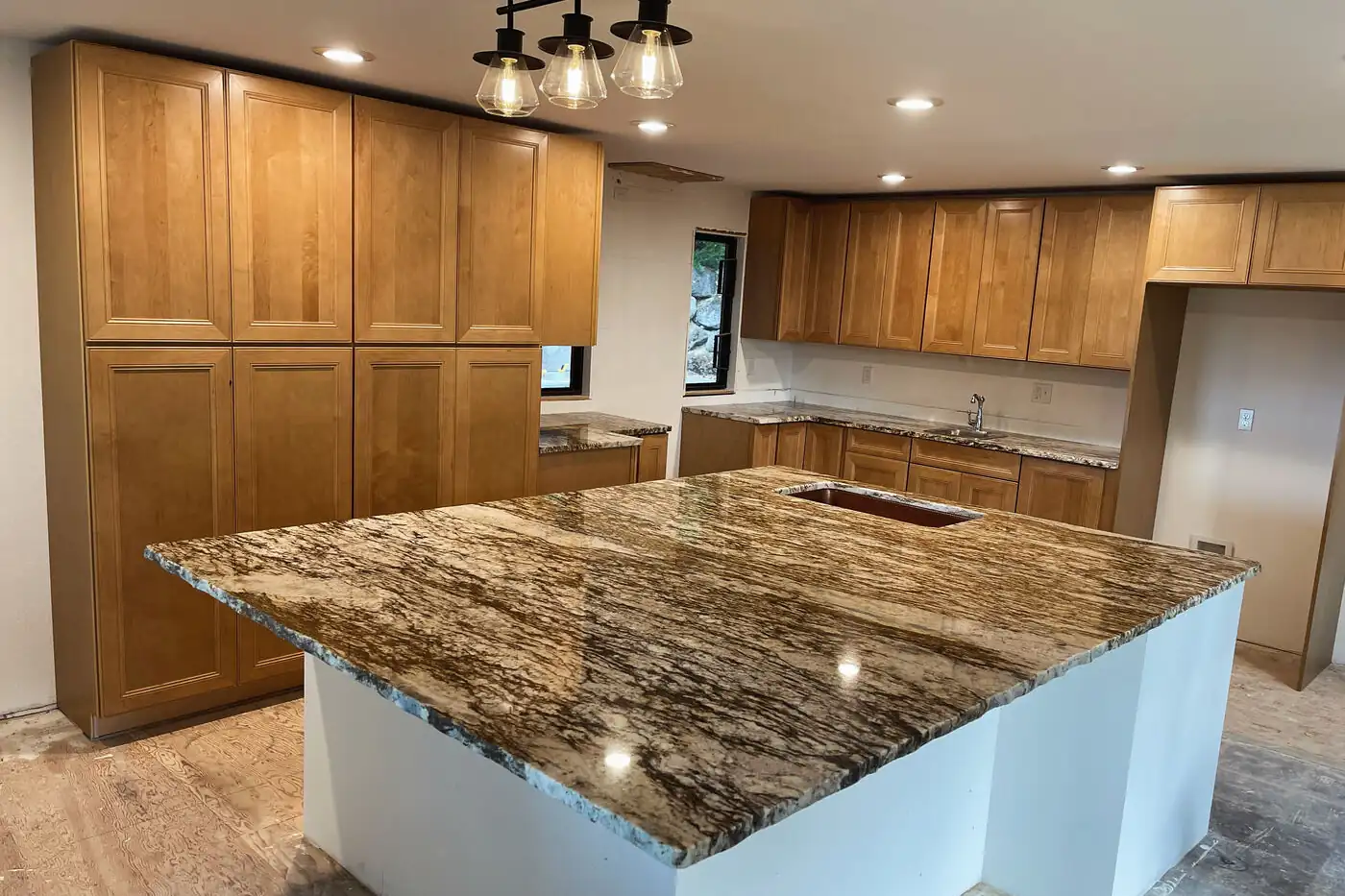
Quartz wins in busy family kitchens: it never needs sealing, shrugs off wine and oil, and comes in a color you can match years later. Granite wins for people who cook hard: it takes a pan straight off the burner, costs less in its common colors, and can be polished back when something goes wrong.
That is the whole answer. The rest of this page is why, and where each one lets you down.
What each one actually is
Engineered quartz is manufactured. Roughly 90 to 93 percent ground natural quartz is mixed with polyester resin and pigment, pressed under vacuum and cured into a slab. The rock in it is hard. The resin holding it together is not, and that single fact explains every weakness quartz has.
Granite is quarried. It is an igneous rock, crystallized slowly out of magma, made mostly of quartz, feldspar and mica. Nothing about it was designed, which is why two slabs are never the same, and why a rock that formed in molten conditions is unbothered by a frying pan.
The naming is unhelpful. Quartz the countertop is a product. Quartz the mineral sits at 7 on the Mohs hardness scale and is present in both materials.
Quartz vs granite, side by side
| Quartz | Granite | |
|---|---|---|
| Origin | Made in a press: ground stone plus resin | Quarried from a block, cut into slabs |
| Hardness | Mohs 7 mineral, softer resin binder | Mohs 6 to 7 |
| Hot pan straight off the burner | No. Most makers cap it near 150 °F | Yes |
| Sealing | Never | About once a year, less for dense blacks |
| Wine, oil, coffee | Non-porous, will not soak in | Soaks in if the seal has worn |
| Vinegar, lemon, bleach | Dulls the resin, permanently | Fine on the stone, strips the sealer |
| Direct sun | Resin can yellow. Not for outdoors | Fine outdoors |
| Chips | Filled with color-matched resin, visible up close | Filled and polished back, close to invisible |
| Pattern | Consistent, repeatable, matchable later | One of a kind, and you must see the actual slab |
| Seams | Nowhere to hide in a plain color | The grain gives your eye somewhere else to go |
| Two-slab kitchens | Same batch, same color | Must come from the same block or they will not match |
| Typical thickness | 2cm and 3cm | 2cm and 3cm |
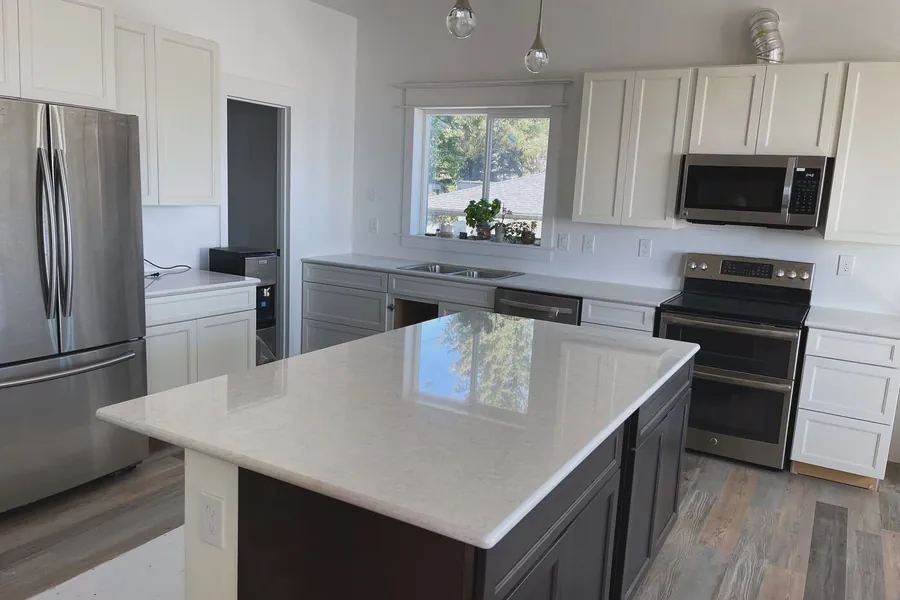
Quartz vs granite by use case, with a winner named
Two kids, weeknight dinners, nobody has time to think about the counter
Quartz. No sealing, no worrying about the olive oil bottle, no annual ritual. You accept two things in exchange: trivets forever, and a seam that shows.
You cook seriously, on gas, with cast iron
Granite. A pan comes off the burner at 400 to 500 °F and goes down somewhere. On granite that is a non-event. On quartz it can leave a dull ring that no cleaner brings back, and heat damage is excluded from every quartz warranty we have read.
You want a calm white kitchen with almost no veining
Quartz. Nothing natural gives you that evenness. The trade is honest and specific: a plain white surface is the hardest thing to hide a seam on, so settle the seam location before you fall in love with the layout.
You want a surface nobody else has
Granite. The movement in a slab is the whole point of it. Go to the yard and stand in front of the actual piece with tape marking where your island lands. A four-inch sample chip tells you the color and lies about everything else.
The budget is tight and fixed
Granite, at the common end. A plain speckled gray or brown granite is usually the cheapest stone in the shop, cheaper than most quartz. The trade is that your color choice narrows to what is in the yard at that price, and granite yard prices swing hard by color.
An outdoor kitchen or a covered patio
Granite. This one is not close. Ultraviolet light breaks down the resin in engineered quartz, colors shift and yellow, and manufacturers exclude outdoor installation from warranty coverage. Porcelain is the other outdoor answer.
A rental, a flip, or a house going on the market next spring
Quartz, entry group. Buyers read it as new and low-maintenance, it photographs evenly, and you are not asking the next owner to seal anything. If the house is high end and the kitchen is the selling point, a figured granite or quartzite does more.
The thing people actually regret
Read enough quartz vs granite threads and you will find people arguing about hardness numbers. Almost none of them regret the material they picked. They regret the seam.
A homeowner on City-Data wrote flatly that seams are always visible in quartz countertops. She is right. A customer in Everett, Washington put the same thought more gently in a review: the product is nice, but they wish the counter had been cut so the seam was less noticeable.
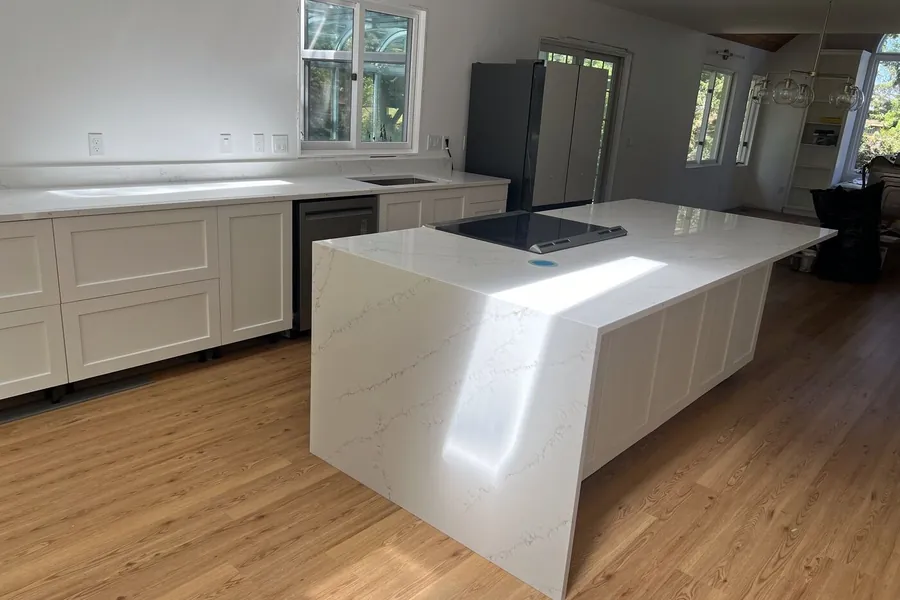
Both complaints are about placement and sign-off, not about quartz. Every kitchen longer than a slab has a seam, in either material. The difference is that granite's grain gives the seam somewhere to disappear and a plain quartz gives it nowhere.
The regret people report in granite is different: two slabs that did not match, discovered on install day. Blocks are sawn in sequence at the quarry, so two slabs from the same block agree and two from different blocks do not.
Ask any fabricator two questions before you sign. Where does the seam go, and can I see that on paper before you cut. If the answer is vague, the answer is no.
How granite is bought slab by slab, and what that changes
Price: what quartz vs granite really costs
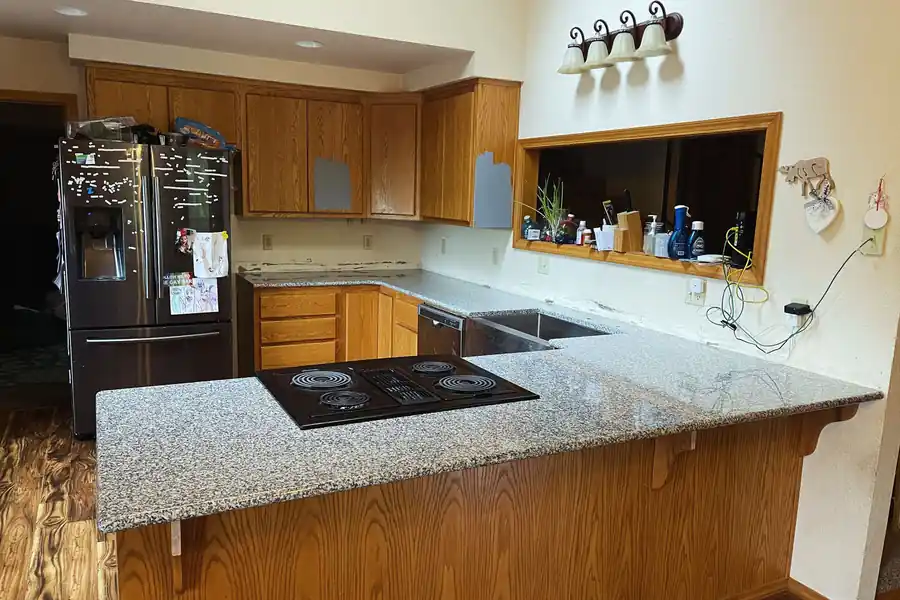
Quartz costs more than granite on average, and the ranges overlap so heavily that the average is useless to you. A common granite is cheaper than almost any quartz. A rare blue or heavily figured granite costs more than the most expensive quartz in the shop.
What moves your number, in order of size:
- Which price group your slab sits in. Inside one material the spread is wider than the gap between materials.
- How many slabs your layout needs. Slabs are sold whole. A long island can force a second slab, and you pay for the stone, not for the part of it we use.
- Edge profile and cutouts. An eased edge is standard. A mitered or built-up edge is two pieces glued and polished to look like one thick one.
- What is under the old counter. Tile comes off harder than laminate.
Fabrication labor is close to identical for the two, with one exception: very hard stone eats diamond tooling, which is why quartzite costs more to cut than either of these.
Questions people ask
Which is better quartz or granite?
For a busy kitchen with children and no maintenance appetite, quartz. For heat, for a slab nobody else has, and usually for price, granite. Nothing about that answer changes with fashion.
Which is more expensive quartz or granite?
Quartz is more expensive on average. The overlap is large enough that the cheapest stone in most shops is a common granite and the most expensive is also a granite.
Which is stronger quartz or granite?
Quartz resists chipping and staining better because it has no pores and no natural fissures. Granite resists heat far better and can be refinished in place. Quartz cannot be refinished on site, so the honest answer depends on how you expect to damage it.
What are the pros and cons of granite vs quartz?
Granite: takes heat, unique, often cheaper, needs sealing about once a year, and slabs must be chosen in person. Quartz: no sealing, no stains, consistent color, but it scorches, it yellows in direct sun, and its seams show.
What is the downside to quartz?
Four of them. Heat. Direct sunlight. Visible seams in plain colors. And repairs that get filled rather than healed.
What kind of countertops are popular right now?
White and light gray quartz with soft veining is the volume seller, and quartzite has taken the top of the market from marble. Granite never left, it moved toward quieter slabs and honed finishes instead of the busy speckled polish of twenty years ago.
Is granite or quartz better for resale value?
Either reads as a real stone counter to a buyer, and both beat laminate by a wide margin. Neither returns its full cost, so choose for the years you will live with it rather than for the appraisal.
What to do next
You have picked a material in your head. The next question is always the same one, and it is the question nobody in this trade wants to print.