
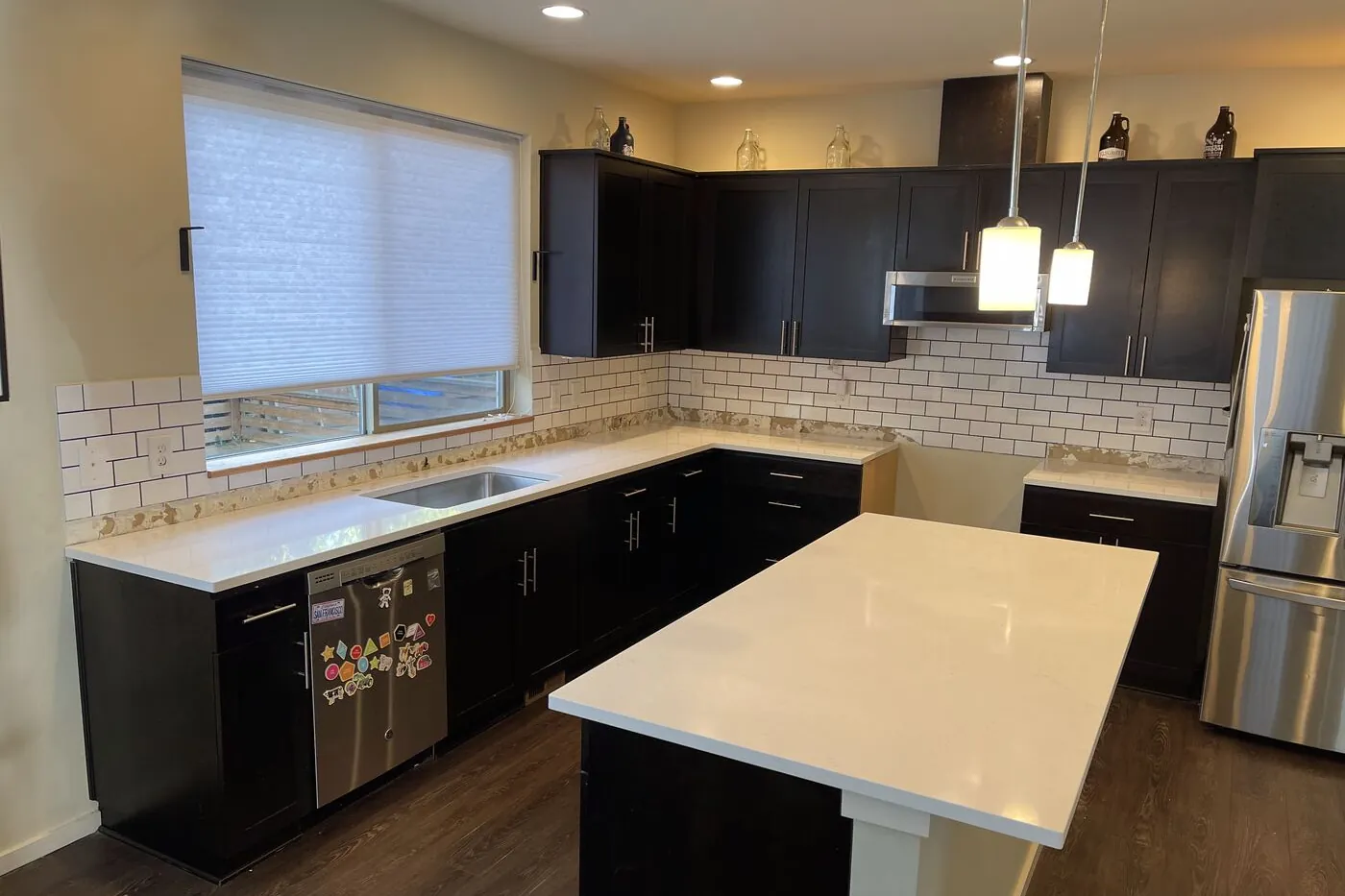
Published national ranges put an installed countertop cost per square foot somewhere between about $40 and $200, depending on the material. Seattle sits in the upper part of that, and the reason is not the stone. It is labor, sales tax and the way slabs are bought here.
What the published averages actually say
These are third-party figures, national or regional, published by companies that survey homeowners rather than fabricate stone. They are a starting frame, not a quote, and no shop in this market is obliged to sit inside them.
| Source | What it publishes | Scope |
|---|---|---|
| Angi | Roughly $50 to $200 per square foot installed for quartz, and about $40 to $100 for granite | National homeowner survey averages |
| HomeAdvisor | A typical whole-project countertop installation in the low thousands, with most projects between roughly $2,000 and $4,500 | National project totals, all materials |
| Consumer Reports | Historically quoted quartz and granite in a similar $40 to $100 band before finishes and edges | National, retail-focused |
| Marble.com and the large national fabricators | Entry granite advertised from the mid $30s per square foot installed | National advertised entry rates |
Three cautions before you use any of them.
They are averages of very different jobs. A laminate swap in a rental and a book-matched marble island are both in that dataset. An average across the two describes neither.
They usually mean the national median. Puget Sound sits in the expensive quarter of the country for construction labor, so a national midpoint reads as a floor here, not a target.
They rarely say what is included. That single fact is responsible for most of the gap between what people expect and what they are quoted, and it gets its own section below.
Slab-only price and installed price are not the same number
A homeowner on a forum worked out her stone cost, saw the quote, and asked how there could be a markup of thousands on top. That gap is the single most common reason a quote feels dishonest, and almost every time it is the same thing: she had a slab price and she was reading it as a finished-kitchen price.
A slab price is what the stone costs standing in a rack. It has not been measured, cut, mitered, polished, drilled, carried up your stairs or sealed to your wall. Between the rack and your cabinets sits all of this:
- Digital templating of the actual room, after the cabinets are in
- Cutting the slab down and polishing every exposed edge
- The sink cutout, the faucet holes, and the cooktop cutout if you have one
- Seam layout, cutting the seam faces flat, and filling them on site
- Delivery, and the crew hours to set stone that weighs what stone weighs
- Tear-out and disposal of whatever is on the cabinets now
- Reconnecting the sink, faucet and disposal
When one shop quotes $45 and another quotes $95, the two are very often quoting different lists. The only reliable way to compare is to insist that every quote is written out by line.
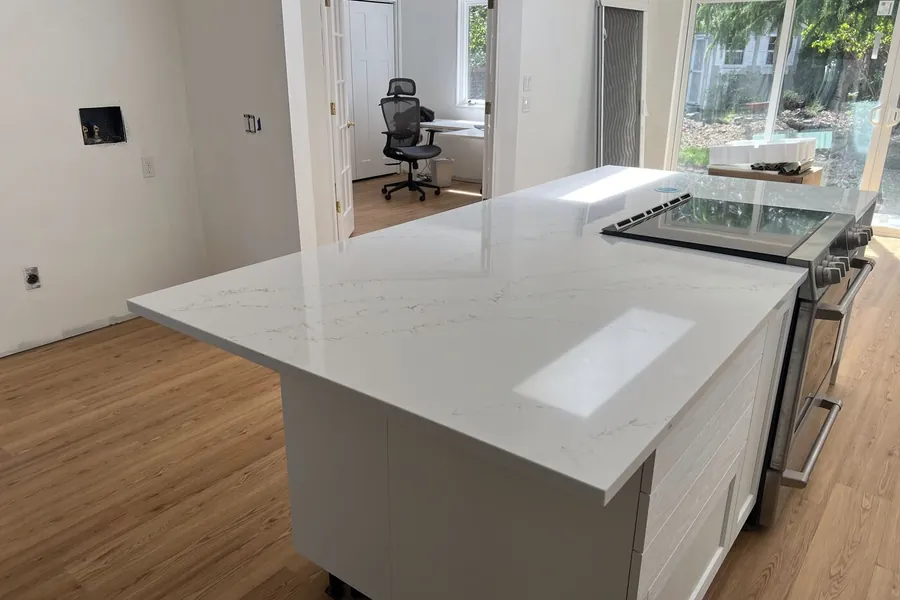
What actually drives countertop cost per square foot in this market
Six things, roughly in order of how much they move the number.
1. Which slab you pick, not which material. The spread inside one material is far wider than the spread between materials. An entry stock quartz and a designer book-matched quartz are the same product category and nowhere near the same money. This is the biggest single lever and it is entirely yours.
2. How many slabs your layout needs. Slabs are sold whole. A layout that needs a few extra inches past what one slab yields buys a second slab, and that second slab is priced at full price whether you use half of it or a tenth. A small change to an island overhang can move a kitchen across that line.
3. Who eats the leftover. A large shop that runs high volume in a few popular colors can buy a whole slab, use half, and sell the other half to the next customer — which lets it advertise a lower rate per foot. A shop buying a whole slab for one kitchen cannot assume that second sale. Neither model is dishonest. They are different arithmetic, and the low advertised rate belongs to the first one.
4. Edges, cutouts and shaping. An eased or quarter-round edge is machine work. A mitered edge is two pieces glued and polished to read as one thick one. A cooktop cutout, a second sink, a drainboard, radius corners and a full-height backsplash are each separate labor.
5. What is already there, and how you get in. Tile comes off harder than laminate and often takes the substrate with it. Cabinets out of level need shimming before stone goes on them. A second-floor kitchen with a tight stair turn needs more people on the crew for the same square footage.
6. Thickness and support. Three-centimeter stone stands on the cabinets on its own. Two-centimeter stone usually wants a deck under it, or a mitered edge to look thicker. A seating overhang past about a foot wants steel or brackets underneath.
The Seattle and Eastside specifics
Four things here are different from what the national numbers assume.
Sales tax applies to labor. In Washington, retail sales tax is charged on the whole job for work on residential real property, not only on the materials. Combined state and local rates on the Eastside sit a little over ten percent depending on the address, per the Department of Revenue's rate lookup. People arriving from income-tax states routinely fail to budget for it. A quote that shows tax on its own line is being straight with you.
Trade labor is scarce and paid accordingly. Fabricators and installers here are choosing between your kitchen and a new-construction contract. That shows up in every hour on your quote.
The slab yards are mostly south and east of the city. Kent, Tukwila and Seattle's industrial south end hold the racks. That is where slabs are picked, and a shop that will drive you out to stand in front of your actual slab is spending a half day to do it.
The housing stock is older than the finishes people want. A great many Bellevue, Kirkland and Redmond kitchens sit in houses built between the sixties and the nineties. Out-of-level cabinets, undersized electrical near an island cooktop and old plumbing under the sink all turn up on countertop day, and all of them land in somebody's line item.
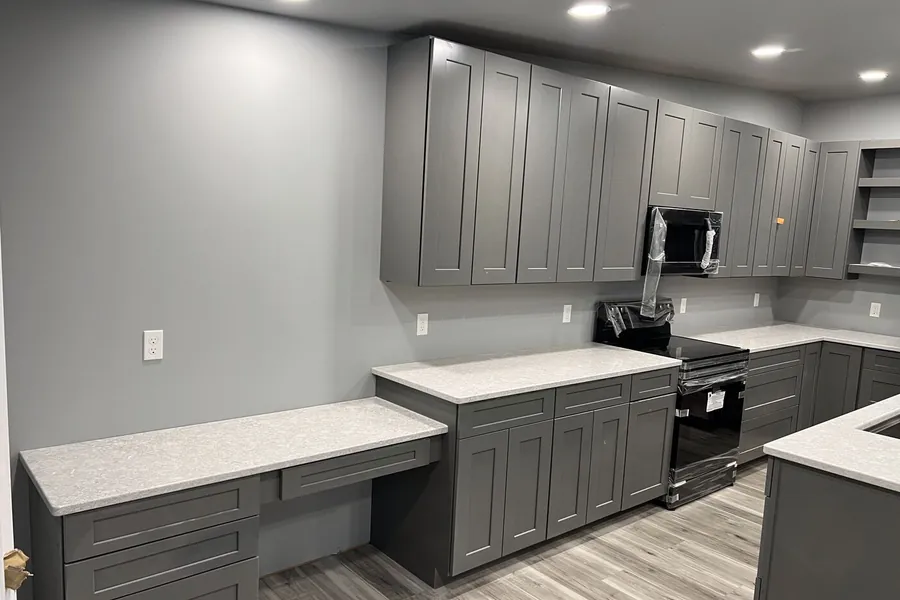
How to compare three quotes so the numbers mean something
Homeowners in this trade decide by collecting bids and comparing them. That works, but only if the bids describe the same job.
- Ask for it written and itemized. One number on a business card cannot be compared to anything.
- Check that all three include tear-out and haul-away. This is the line most often missing from the lowest quote.
- Check the edge and the cutouts. Which edge is included, and is the cooktop cutout in or out.
- Ask how many slabs the quote assumes. If one shop assumed one slab and another assumed two, you are not comparing prices, you are comparing guesses about yield.
- Ask whether the stone is a full slab or a prefabricated piece. Prefab is genuinely cheaper and genuinely fine in a laundry room. In a kitchen with an island you pay for it in seams.
- Ask when the precise measurement happens. If nobody has laser-templated the room yet, every number in front of you is provisional, and it should say so.
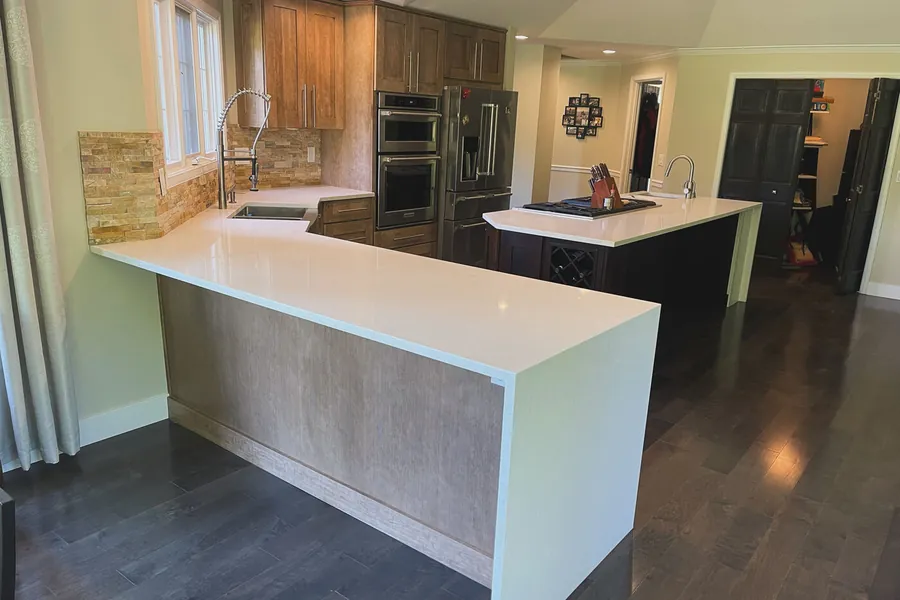
Questions people ask
How much do countertops cost per square foot?
Published national ranges run roughly $40 to $200 installed depending on material, per Angi's homeowner survey data. Where you land inside that is decided by which slab you pick and how many slabs your layout needs, not by the name of the stone.
What is the average cost of quartz countertops per square foot?
Angi publishes roughly $50 to $200 per square foot installed for quartz nationally. The average inside that band is close to meaningless, because it blends stock colors with designer book-matched slabs.
Who has the best price on countertops?
Nobody is cheapest on every job. Shops running high volume in a few colors are usually cheapest on plain layouts in those colors. A shop with its own saw is usually cheaper where the work is complicated. Get three itemized quotes and compare the bottom lines.
Why is my quote so much higher than the price I saw advertised?
Advertised rates are usually slab-only, entry-color, prefabricated, or all three. Compare an installed, itemized quote to another installed, itemized quote and the gap usually shrinks to something explainable.
Does Washington charge sales tax on countertop installation?
Yes. Retail sales tax applies to labor as well as materials on residential construction work in this state. Expect it as a line on the quote.
Is it cheaper to buy a remnant?
For a vanity, a bar top or a laundry counter, almost always. A remnant is an offcut from a finished kitchen, sold by the piece, and below the entry tier on any scale.
What to do next
Market ranges tell you which neighborhood the number lives in. They cannot tell you your number, because they do not know your slab, your layout or your stairs.
Our own pricing page explains the two halves your quote is built from, the slab tier scale we use instead of a per-foot figure, and how the free in-person pre-measure turns it into a written number.