
A standard full bathroom remodel in Washington runs about $18,000 to $35,000. Cosmetic refreshes start near $5,000 and primary suites pass $40,000. Washington sits above national averages for two reasons: trade labor is expensive here, and the state charges retail sales tax on the labor, not only on the materials.
People search bathroom remodel cost Washington State hoping for one number. There is not one. There are four things that decide it, and three of them are settled before anyone picks a tile.
Bathroom remodel cost Washington State, by scope
Two published national benchmarks are worth knowing before you read any local number. Angi puts a bathroom remodel between roughly $6,600 and $18,000 with an average near $12,000. Remodeling magazine's Cost vs. Value report has put a midrange bathroom remodel above $25,000 nationally for several years running. Puget Sound sits in the expensive quarter of the country for construction labor, so treat national averages as a floor rather than a target.
The bands below are the ranges commonly quoted for these scopes in this market. One Bellevue remodeler publishes $7,288 for a 10-foot by 6-foot bathroom including labor and materials, and $12,000 to $19,000 for a midrange renovation, which is a fair picture of where the bottom of the market sits.
| Scope | What is in it | Typical range quoted here |
|---|---|---|
| Cosmetic refresh | Paint, vanity, faucet, light, mirror, toilet. Nothing moves | $5,000 – $12,000 |
| Standard full remodel | Out to the studs, same layout, new tile, tub or shower, vanity, flooring | $18,000 – $35,000 |
| Tub-to-shower conversion | Tub out, curbless or low-curb shower in, new waterproofing, glass | $12,000 – $25,000 |
| Primary suite, layout changed | Drains and walls move, double vanity, freestanding tub, heated floor, glass | $40,000 – $90,000+ |
Those are market ranges, not a bid. What a specific bathroom costs depends on the four things below, and any contractor who will not walk you through them line by line is guessing at your expense.
Where the money goes
Labor is the majority of a bathroom remodel almost everywhere, and more so here. A bathroom is the densest room in the house: plumbing, electrical, waterproofing, tile, glass, cabinetry and paint inside about forty square feet, with several trades taking turns in it.
| Line | Share of a typical full remodel |
|---|---|
| Labor across all trades | 45 – 60% |
| Tile, stone and waterproofing materials | 15 – 20% |
| Fixtures: tub, shower valve, toilet, sink | 10 – 15% |
| Vanity, counter, mirror, lighting | 10 – 15% |
| Permits, dump fees, protection, cleanup | 3 – 8% |
Four things that decide your number
- Does anything move. Keeping the toilet, tub and sink where they are is the largest single lever in the budget. Moving a drain means opening the floor, and with a slab or a finished ceiling below, opening that too.
- What is behind the tile. Nobody knows until demolition. Rot around a shower pan, a leaking valve, and a subfloor that has been wet for a decade are the three that turn up most.
- How custom the shower is. A prefabricated pan with a standard door is one price. A curbless tiled pan with linear drain, niche, bench and frameless glass roughly doubles the labor.
- What you pick. Tile runs from about $3 to more than $30 per square foot, and setting large-format porcelain is not the same labor as setting a 2-inch mosaic.
The Washington rules that change the arithmetic
These are specific to this state, and they surprise people who moved here from somewhere else.
Sales tax applies to labor. In Washington, retail sales tax is charged on the whole job for work on residential real property, not only on materials. Combined state and local rates on the Eastside sit a little over 10 percent depending on the address, per the Department of Revenue's rate lookup. On a $30,000 bathroom that is roughly $3,000 people arriving from income-tax states do not budget for. A bid that shows tax on its own line is being straight with you.
Contractors must be registered with L&I. Washington requires registration, a surety bond and liability insurance. The Department of Labor and Industries runs a free Verify a Contractor lookup showing registration status, bond, insurance and any lawsuits against the license. It takes a minute, and it is the highest-value minute in this process.
You are owed a Notice to Customer. Under RCW 18.27.114, a contractor doing residential work over $1,000 has to give you a written disclosure statement explaining lien rights before starting. If you never received one, that tells you something about how the rest of the paperwork will go.
Permits. Swapping a fixture in the same location generally does not need one. Moving a drain, adding a circuit, changing a window or altering framing does, and Bellevue, Kirkland and Redmond all issue plumbing and electrical permits separately from the building permit. Permit fees are a small share of the budget. The schedule matters more: inspections have to land between trades, and a missed inspection can cost a week.
Asbestos in anything built before about 1980. Old vinyl floor tile, sheet flooring adhesive and some joint compound contain it. The Puget Sound Clean Air Agency regulates removal, and a survey by a certified inspector is required before demolition on most structures. Owner-occupied single-family homes are treated differently from rentals and condos, so ask your contractor which applies to you before the sledgehammer comes out.
Why Eastside bids run higher than Seattle or Everett
A homeowner comparing quotes wrote that one bid came in at double the highest of the others. That happens here, and only part of it is opportunism. The rest is structural:
- Trade labor is scarce and paid accordingly. Tile setters and plumbers here choose between your bathroom and a new-construction contract.
- Housing stock. Many Bellevue, Kirkland and Redmond bathrooms sit in homes built between 1960 and 1990, with cast iron drains, galvanized supply lines and undersized electrical. Bringing any of that to current code lands in your bathroom budget.
- HOA and condo rules. Mid-rise buildings mean elevator reservations, work-hour windows, engineer sign-offs and no dumpster in the driveway.
- Finish expectations. Frameless glass, heated floors and large-format porcelain are the default here, not the upgrade.
- Access. Second-floor bathrooms, tight stairs and long carries add crew hours to every delivery and every load of debris.
The season nobody tells you about
Demand in Puget Sound is seasonal, and the pattern is consistent.
- March to May is when most quotes get requested, because people decide over the winter.
- June to September is the crush. Crews are booked, lead times stretch, and nobody has an incentive to sharpen a price.
- October to December slows down as the weather turns and the holidays land.
- January and February are the quietest weeks of the year for interior remodeling. Bathrooms are indoor work, rain does not matter, and a contractor with an open January is more flexible on schedule and on price than the same contractor in June.
If your project is not urgent, asking for bids in November for a January start is the cheapest scheduling decision available to you.
What a bathroom remodel includes when we do it, and what we subcontract
Questions people ask
What is the average cost of a bathroom remodel in Washington State?
Most full remodels land between $18,000 and $35,000, with cosmetic refreshes below and primary suites above. Washington runs above national averages because labor is expensive here and sales tax applies to the labor.
What is a realistic budget for a bathroom remodel?
For a standard full bathroom in this market, start at $20,000 and add a contingency of 10 to 15 percent for what is found behind the tile. If that number does not work, keep the layout and spend the money on surfaces instead.
Is $10,000 enough for a bathroom remodel?
In Washington, $10,000 buys a strong cosmetic refresh: vanity, counter, toilet, faucet, lighting, paint and flooring, with everything staying where it is. It does not buy a new tiled shower with glass, and any bid claiming it does has left something out.
What is the 30% rule in remodeling?
The common version is to keep a whole-house renovation under about 30 percent of the home's value, and a single room under roughly 10 to 15 percent of it. It is a guardrail against overbuilding for the block, not a law.
How much of a bathroom remodel is labor?
Between 45 and 60 percent of the total on a typical full remodel. That is why moving plumbing costs so much more than upgrading tile.
How long does a bathroom remodel take?
Three to five weeks of working days for a standard full remodel, longer if a fixture is backordered or an inspection slips. The number that matters is how many of those days you have no working bathroom, so ask for that specifically.
Do I need a permit to remodel a bathroom in Washington?
Not for a like-for-like fixture swap. Yes for moving plumbing, adding electrical circuits, or altering framing. Your city issues them, and the contractor should pull them under their license, not yours.
What to do next
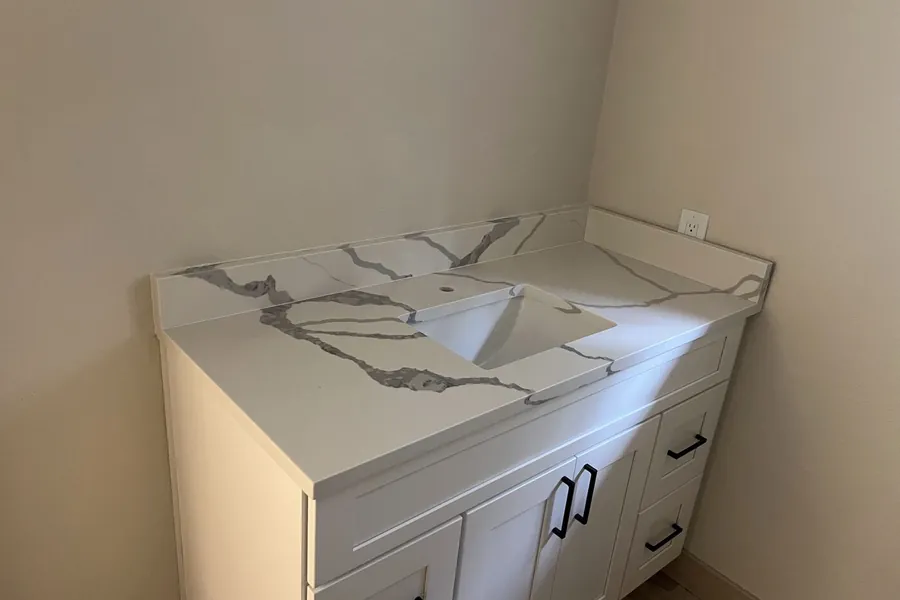
Countertops are the one line in a bathroom budget you can price yourself in about two minutes, and a vanity top is small enough that a remnant piece often covers it.